http://www.nature.org/wherewework/northamerica/states/hawaii/
Together with our members and conservation partners, The Nature Conservancy has protected more than 200,000 acres of critical natural lands in Hawai‘i.
Remember when "environmentalist" meant…recycling? It's not so simple anymore. Being an environmentalist today calls for a whole new level of greener thinking — from what you choose at the grocery store to how you commute to work every day. So check out these eco-friendly tips from Nature Conservancy staff and leading environment bloggers on how to make personal, science-based choices to help save the planet.
Showing posts with label discount travel. Show all posts
Showing posts with label discount travel. Show all posts
Thursday, February 7, 2008


Wednesday, February 6, 2008
Getting your feet wet- First time scuba
By: Amanda W. (Scuba Junkie)
Life of a beginner scuba queen
2/6/08
Being from Iowa, you may not consider scuba diving an option for me. That is, unless you don't know where Iowa is or that we're the land of corn. Not exactly teeming with fantastic vacation dive spots that are flocked with tourists. I want to share my thoughts and experiences as I go through the process of learning to scuba dive.
My hope is that fellow novices can learn from my stories, or maybe more advanced divers to gain an understanding of beginners. No matter the reason for your interest in scuba, it has brought you to this point. Some background on myself is that I do not like being in a bathing suit, am not used to being in water, dislike emerging my face in water, and have a fear of drowning. With that said, through the encouragement and passion of a friend, I am preparing to take my first steps toward becoming an Open Water Diver.
I personally had my first experience with snorkeling in April 2007 in Nassau, Bahamas while on vacation. After the first 15 minutes in the water of thinking I was going to drown, I began to relax and focus more on my desire to see the beauty beneath me. I had to practice at breathing through the snorkel underwater, and let me tell you it is a strange feeling to see below and continue breathing. My friend and I had $10 underwater cameras, but the pictures could not do justice for what we could see with our own eyes. I was a bit disappointed in the coral to be honest, but I really had nothing to compare it to. After all, I went for the experience, and the fish didn't disappoint.
With Scuba Jay's prompting I began to consider trying scuba, though after almost hyperventilating with just snorkeling I had my reservations. We began with hearing stories and watching videos on YouTube and learning of different types and purposes of diving- wreck/ excavation diving, underwater archeology, underwater ecology, vacation diving, underwater photography, night diving, cave diving, ice diving, rescue diving, search and recovery diving, and for academic or research purposes. For me, I am interested in a few of the aforementioned so I recommend that if you're nervous, find one you can use as a motivator to get your feet wet. I am assured that once you start, you're hooked.
There is a progression to diving certifications and two primary governing bodies NAUI and PADI, though SDI, TDI, WASI, and NASE are also out there.
NAUI:
1. Skin diver
2. Scuba diver
3. Advanced scuba diver
4. Master scuba diver
5. Leadership certifications
· Divemaster
· Skin diving Instructor
· Assistant Instructor
6. NAUI scuba Instructor
PADI:
1. Open water diver
2. Advanced open water diver
3. Rescue diver
4. Master scuba diver OR Divemaster (which can lead to Course Director)
There are many special certifications you can receive along the way of both NAUI's and PADI's paths. Each level requires varying numbers of dives you must successfully complete, and some coursework as well.
Life of a beginner scuba queen
2/6/08
Being from Iowa, you may not consider scuba diving an option for me. That is, unless you don't know where Iowa is or that we're the land of corn. Not exactly teeming with fantastic vacation dive spots that are flocked with tourists. I want to share my thoughts and experiences as I go through the process of learning to scuba dive.
My hope is that fellow novices can learn from my stories, or maybe more advanced divers to gain an understanding of beginners. No matter the reason for your interest in scuba, it has brought you to this point. Some background on myself is that I do not like being in a bathing suit, am not used to being in water, dislike emerging my face in water, and have a fear of drowning. With that said, through the encouragement and passion of a friend, I am preparing to take my first steps toward becoming an Open Water Diver.
I personally had my first experience with snorkeling in April 2007 in Nassau, Bahamas while on vacation. After the first 15 minutes in the water of thinking I was going to drown, I began to relax and focus more on my desire to see the beauty beneath me. I had to practice at breathing through the snorkel underwater, and let me tell you it is a strange feeling to see below and continue breathing. My friend and I had $10 underwater cameras, but the pictures could not do justice for what we could see with our own eyes. I was a bit disappointed in the coral to be honest, but I really had nothing to compare it to. After all, I went for the experience, and the fish didn't disappoint.
With Scuba Jay's prompting I began to consider trying scuba, though after almost hyperventilating with just snorkeling I had my reservations. We began with hearing stories and watching videos on YouTube and learning of different types and purposes of diving- wreck/ excavation diving, underwater archeology, underwater ecology, vacation diving, underwater photography, night diving, cave diving, ice diving, rescue diving, search and recovery diving, and for academic or research purposes. For me, I am interested in a few of the aforementioned so I recommend that if you're nervous, find one you can use as a motivator to get your feet wet. I am assured that once you start, you're hooked.
There is a progression to diving certifications and two primary governing bodies NAUI and PADI, though SDI, TDI, WASI, and NASE are also out there.
NAUI:
1. Skin diver
2. Scuba diver
3. Advanced scuba diver
4. Master scuba diver
5. Leadership certifications
· Divemaster
· Skin diving Instructor
· Assistant Instructor
6. NAUI scuba Instructor
PADI:
1. Open water diver
2. Advanced open water diver
3. Rescue diver
4. Master scuba diver OR Divemaster (which can lead to Course Director)
There are many special certifications you can receive along the way of both NAUI's and PADI's paths. Each level requires varying numbers of dives you must successfully complete, and some coursework as well.
Tuesday, February 5, 2008
Hawaii Dolphin Swim & Snorkel
Come and spend the afternoon with the amazing crew of the Kaaihue Eater of the Dead as they take you snorkeling off the west coast of O'ahu! Before embarking on your adventure, you will be treated to either a delicious continental breakfast of Kona coffee, hot tea, cocoa and donuts for the morning tour, or a light midday snack of soda, snacks and fruit for the afternoon tour.After boarding the vessel, you will go for a short 10-minute cruise up the coastline where, if conditions permit, you will have the opportunity to swim with Nai'a, the Hawaiian Spinner Dolphins. These beautiful marine mammals were loved, respected and protected by the ancient Hawaiian people. Kaaihue Brothers Adventures crew continue to honor that tradition and, if the conditions permit, they will allow you to passively swim among them, but there is a very strict no-touching and no loud and disruptive behavior policy. We will feed you to the sharks!
Following your swim with the dolphins, this three hour tour continues with snorkeling in beautiful live coral gardens with schools of brilliantly colored reef fishes and also swimming with another member of the ocean family, the Honu or Hawaiian Green Sea Turtles of "turtle town". You'll be amazed and awed by the abundant sea life in this pristine natural environment.
As you head back to shore, just sit back and relax because Kaaihue Brothers will also provide you with a light lunch!
The Boats:
The 37-foot Threaser-built Kaaihue Eater of the Dead offers one of the best rides on Hawaii waters! It's 478-HP engine allows exceptionally high-speed rides at up to 22-knots and it also has comfortable ocean side seating for up to 35-passengers, a powerful engine and an onboard restroom.
The Maui Adventure is a 71-foot RIB (rigged inflatable boat) vessel that can carry 90passengers for a fun-filled day of snorkeling and dolphin watching. You will be seated comfortably on the boat as the three powerful 600-HP engines propel the vessel at 29-knots over the beautiful waters of the Pacific Ocean. There is plenty of comfortable center seating and an onboard restroom as well.
Keywords:
Advance Scuba training, Adventure Sports, Basic Open Water, Digital Underwater Photography, Extreme Scuba and Jason Kilgore, family travel, sharks, discount travel, Enriched Air, Hawaii Scuba Diving, Hawaiian Islands sight seeing, ITAN, Kona, NAUI, NOAA, other specialty certifications, sharks, SSI, TDI/SDI, airlines, family travel, family vacations, Hawaii reef divers, Hawaiian Islands, hotels, Jason Kilgore, Maui, scuba certification, scuba diving, scuba rental gear, Scuba Hawaii, Hawaii Travel, Caribbean Scuba, Scuba Certification, Scuba Jay, Costa Maya Scuba Dive, Gear, Cave Diving, TDI, Water Rescue Diving, Water Rescues, PADI Technical Scuba Diving, Dive Rescue, Scuba Dive Answers, Jason Kilgore and Martial Arts, Jason Kilgore and USANA, Jason Kilgore and Karate, Jason Kilgore and Scuba Diving, Sacramento, auburn, California, Hawaii, Jason Kilgore and Sierra Foothills Karate, Sierra Foothills Karate and Scuba Diving, Jason Kilgore and Scuba Diving, snorkel and fins, vacation, Basic Open Water, Extreme Scuba and Jason Kilgore, Hawaiian Islands, PADI Divemaster SCUBA Certification, Snorkel Bob, Snorkeling/Fin, TDI/SDI, Underwater Instructors, airlines, Divemaster scuba, family vacations, Reef Relief, coral reef, reef fish, maui divers, dive shops, scuba dive shops, cave diving, ice diving, wreck diving, Shark Diving, Shark Exploration, Baja, South America, vacation, Scuba and Jason Kilgore, Naui and Jason Kilgore, How to scuba dive?, skin diving, snorkel, mask, fins, sight seeing, hotels, Jason Kilgore and Hawaiian islands, Kona, Maui, other specialty certifications, Ocean Conservancy, International Coastal Cleanup, Costa Maya Hotel, Mexico Hotels, Mexico Scuba Diving, Diving in South American Scuba, Crabs, Sea Slugs, Marine Animals, Wildlife, Florida, Southern States, Marine Life, Pacific States, Pacific Northwestern States, California
Following your swim with the dolphins, this three hour tour continues with snorkeling in beautiful live coral gardens with schools of brilliantly colored reef fishes and also swimming with another member of the ocean family, the Honu or Hawaiian Green Sea Turtles of "turtle town". You'll be amazed and awed by the abundant sea life in this pristine natural environment.
As you head back to shore, just sit back and relax because Kaaihue Brothers will also provide you with a light lunch!
The Boats:
The 37-foot Threaser-built Kaaihue Eater of the Dead offers one of the best rides on Hawaii waters! It's 478-HP engine allows exceptionally high-speed rides at up to 22-knots and it also has comfortable ocean side seating for up to 35-passengers, a powerful engine and an onboard restroom.
The Maui Adventure is a 71-foot RIB (rigged inflatable boat) vessel that can carry 90passengers for a fun-filled day of snorkeling and dolphin watching. You will be seated comfortably on the boat as the three powerful 600-HP engines propel the vessel at 29-knots over the beautiful waters of the Pacific Ocean. There is plenty of comfortable center seating and an onboard restroom as well.
Keywords:
Advance Scuba training, Adventure Sports, Basic Open Water, Digital Underwater Photography, Extreme Scuba and Jason Kilgore, family travel, sharks, discount travel, Enriched Air, Hawaii Scuba Diving, Hawaiian Islands sight seeing, ITAN, Kona, NAUI, NOAA, other specialty certifications, sharks, SSI, TDI/SDI, airlines, family travel, family vacations, Hawaii reef divers, Hawaiian Islands, hotels, Jason Kilgore, Maui, scuba certification, scuba diving, scuba rental gear, Scuba Hawaii, Hawaii Travel, Caribbean Scuba, Scuba Certification, Scuba Jay, Costa Maya Scuba Dive, Gear, Cave Diving, TDI, Water Rescue Diving, Water Rescues, PADI Technical Scuba Diving, Dive Rescue, Scuba Dive Answers, Jason Kilgore and Martial Arts, Jason Kilgore and USANA, Jason Kilgore and Karate, Jason Kilgore and Scuba Diving, Sacramento, auburn, California, Hawaii, Jason Kilgore and Sierra Foothills Karate, Sierra Foothills Karate and Scuba Diving, Jason Kilgore and Scuba Diving, snorkel and fins, vacation, Basic Open Water, Extreme Scuba and Jason Kilgore, Hawaiian Islands, PADI Divemaster SCUBA Certification, Snorkel Bob, Snorkeling/Fin, TDI/SDI, Underwater Instructors, airlines, Divemaster scuba, family vacations, Reef Relief, coral reef, reef fish, maui divers, dive shops, scuba dive shops, cave diving, ice diving, wreck diving, Shark Diving, Shark Exploration, Baja, South America, vacation, Scuba and Jason Kilgore, Naui and Jason Kilgore, How to scuba dive?, skin diving, snorkel, mask, fins, sight seeing, hotels, Jason Kilgore and Hawaiian islands, Kona, Maui, other specialty certifications, Ocean Conservancy, International Coastal Cleanup, Costa Maya Hotel, Mexico Hotels, Mexico Scuba Diving, Diving in South American Scuba, Crabs, Sea Slugs, Marine Animals, Wildlife, Florida, Southern States, Marine Life, Pacific States, Pacific Northwestern States, California
People of Hawaii

The people of Hawaii can be described as racially diversified, though the population of the mainland U.S. is beginning to appear so too. However, though the racial make-up of the rest of the U.S. seem to be predominately Caucasians, Blacks and Hispanics and a minority of Asians, in Hawaii, is seems more to be East Asians, Southeast Asians, Hawaiians and other Polynesians, Caucasians including Hispanics and Blacks. Also significant are the people of mixed racial background of the above mentioned races. Maybe some of the photos can do justice to what I’m trying to describe. It was taken during a parade to honor the University of Hawaii Football team that won the WAC Championship, but also included other UH teams and Local High School teams.
The photos featured here are of a small Southeast Corner of the Island of Oahu which includes the Kokohead-Makapuu area and the district of Waimanalo. The landscape is varied, in parts dry, rugged yet very beautiful. For those who may be thinking where they can go to spend a day or even part of the day, this section may be the answer. If you just want to relax and go sightseeing and don’t want to

View from Makapuu Lighthouse Hike.
expend too much energy and time, this is the place. If you want to sightsee, have lots of energy and time to spare this is also the place for you.
As most hotels are located in Waikiki, what the visitor needs to do is just drive East on the main highway called Kalakaua Ave. He’ll end up on Diamond Head Rd. which will then take him around Diamond Head and on to Kahala and the Residential Areas of East Honolulu for about another 5 miles. When he’s at the base of Kokohead, he has arrived.
Just about a few feet is the entrance to World famous Hanauma Bay, shown in the movie Blue Hawaii. It is a must stop for everyone, as the view from the top and the beach below is breathtaking. Also highly recommended is some snorkeling to experience the magic of the underwater sea-life there.
After leaving this paradise, you may (or may not) want to visit the Kokohead Botanical Gardens located a few more hundred feet away within the Kokohead Crater. However, it can be a hot dusty walk, so it’s not for everyone. It’s has many Cactus and other plants.

Another Hiking View
a few more hundred feet is the Blow Hole Lookout, which one can see the island, vaguely, of Molokai, on a clear day. If you’re lucky the spouting Blow Hole will put on a wonderful geyser show.
Proceeding on, you may see a sign saying “Ka Iwi”. Actually is better known as the starting point for the 45 minute hike up an old service road to the Makapuu Lighthouse. The view going up is quite spectacular as well as the finale at the end, of Rabbit Island and the coast of Makapuu and Waimanalo. This is an option for those with energy and time, but also highly recommended (by me). If it’s early in the year, you may see whales. However, if you’re not the energetic type, as you drive a few more feet pass this sign, you will see a lookout point, that gives you also a pretty good view of Rabbit Island and the Coast, sans the sweating.
As you continue on, you pass though Waimanalo, know for it’s beautiful beaches and view of the rugged Koolau mountain ranges. Most of the homes belong to Native Hawaiian homesteaders. However, deeper into the valley towards the mountain
Rabbit Island.
Looks like a whale, but called Rabbit Island because of the abundance of rabbits there. Also a Bird Sanctuary.range, you see more agricultural farms especially flower nurseries. Just by the lush tropical greenery that surrounds you, you can understand why.
Friday, January 25, 2008
Pollution to the marine environment
DID YOU KNOW?
80 percent of pollution to the marine environment comes from land-based sources, such as runoff pollution. Runoff pollution includes many small sources, like septic tanks, cars, trucks and boats, plus larger sources, such as farms, ranches and forest areas.
Millions of motor vehicle engines make daily, one-drop-at-a-time "oil spills" onto roads and parking lots, which add significantly to runoff pollution.
Some water pollution actually starts as air pollution, which settles into waterways and oceans.
Dirt can be a pollutant. Top soil or silt from fields or construction sites can run off into waterways, harming fish and wildlife habitats.
Non-point source pollution, commonly called runoff pollution, can make river and ocean water unsafe for humans and wildlife. In some areas, runoff pollution is so bad that it causes beaches to be closed after rainstorms. In 1992, for example, some beaches were closed or advisories were issued against swimming about 3,000 times.
Drinking water supplies can be contaminated by polluted runoff, as can coastal waters containing valuable fish stocks. Experts think there is a link between agricultural runoff and water-borne organisms that cause lesions and death in fish. Humans who come in contact with these polluted waters and affected fish can also experience harmful symptoms.
More than one-third of the shellfish-growing waters of the United States are adversely affected by coastal pollution.
Correcting the harmful effects of runoff pollution is costly. Each year millions of dollars are spent to restore and protect areas damaged or endangered by non-point source pollutants.
The Commerce Department's National Oceanic and Atmospheric Administration (NOAA) works with the Environmental Protection Agency, Department of Agriculture and other federal and state agencies to develop ways to control runoff pollution. These agencies work together to monitor, assess and limit runoff pollution that may result naturally and by human actions.
NOAA's Coastal Zone Management Program is helping to create special non-point source pollution control plans for each participating coastal state. When runoff pollution does cause problems, NOAA scientists help track down the exact causes and find solutions.
Get educated and share your knowledge!
Don't pour oil, engine fluids, cleaners, or household chemicals down storm drains or sinks.
Find approved motor oil and household chemical recycling or disposal facilities near your home, and make sure your family and friends use them.
Use lawn, garden and farm chemicals sparingly and wisely. Before spreading chemicals or fertilizer, check the weather forecast for rain so they don't wash away.
Repair automobile or boat engine leaks immediately.
Year of the Ocean Information Line: 1-888-4YOTO98
Year of the Ocean Website: www.yoto.com
NOAA's National Ocean Service
Office of Coastal Resource Management
ATTN: Non-point Pollution
1305 East-West Highway
Silver Spring, MD 20910
Website: www.nos.noaa.gov/ocrm/
Call your state environmental or conservation department.
U.S. Environmental Protection Agency
Non-point Source Control Branch
Washington, DC 20460
Website: www.epa.gov/owow/nps/index.html
Check your phone directory, or call your city or county environmental quality or sanitation department, for oil and chemical waste recycling/disposal.
Keywords:
Advance Scuba training, Adventure Sports, airlines, Basic Open Water, Digital Underwater Photography, discount travel, Divemaster scuba, Enriched Air, Extreme Scuba and Jason Kilgore, family travel, family vacations, Hawaii reef divers, Hawaii Scuba Diving, Hawaiian Islands, Hawaiian Islands sight seeing, hotels, Jason Kilgore, Kona, Maui, scuba certification, other specialty certifications, NAUI, NOAA, scuba diving, scuba rental gear, sharks, SSI, TDI/SDI, Underwater Instructors, vacation, Scuba and Jason Kilgore, Naui and Jason Kilgore, How to scuba dive, skin diving, snorkel, mask, fins, Reef Relief, coral reef, reef fish, maui divers, dive shops, scuba dive shops, cave diving, ice diving, wreck diving
80 percent of pollution to the marine environment comes from land-based sources, such as runoff pollution. Runoff pollution includes many small sources, like septic tanks, cars, trucks and boats, plus larger sources, such as farms, ranches and forest areas.
Millions of motor vehicle engines make daily, one-drop-at-a-time "oil spills" onto roads and parking lots, which add significantly to runoff pollution.
Some water pollution actually starts as air pollution, which settles into waterways and oceans.
Dirt can be a pollutant. Top soil or silt from fields or construction sites can run off into waterways, harming fish and wildlife habitats.
Non-point source pollution, commonly called runoff pollution, can make river and ocean water unsafe for humans and wildlife. In some areas, runoff pollution is so bad that it causes beaches to be closed after rainstorms. In 1992, for example, some beaches were closed or advisories were issued against swimming about 3,000 times.
Drinking water supplies can be contaminated by polluted runoff, as can coastal waters containing valuable fish stocks. Experts think there is a link between agricultural runoff and water-borne organisms that cause lesions and death in fish. Humans who come in contact with these polluted waters and affected fish can also experience harmful symptoms.
More than one-third of the shellfish-growing waters of the United States are adversely affected by coastal pollution.
Correcting the harmful effects of runoff pollution is costly. Each year millions of dollars are spent to restore and protect areas damaged or endangered by non-point source pollutants.
The Commerce Department's National Oceanic and Atmospheric Administration (NOAA) works with the Environmental Protection Agency, Department of Agriculture and other federal and state agencies to develop ways to control runoff pollution. These agencies work together to monitor, assess and limit runoff pollution that may result naturally and by human actions.
NOAA's Coastal Zone Management Program is helping to create special non-point source pollution control plans for each participating coastal state. When runoff pollution does cause problems, NOAA scientists help track down the exact causes and find solutions.
Get educated and share your knowledge!
Don't pour oil, engine fluids, cleaners, or household chemicals down storm drains or sinks.
Find approved motor oil and household chemical recycling or disposal facilities near your home, and make sure your family and friends use them.
Use lawn, garden and farm chemicals sparingly and wisely. Before spreading chemicals or fertilizer, check the weather forecast for rain so they don't wash away.
Repair automobile or boat engine leaks immediately.
Year of the Ocean Information Line: 1-888-4YOTO98
Year of the Ocean Website: www.yoto.com
NOAA's National Ocean Service
Office of Coastal Resource Management
ATTN: Non-point Pollution
1305 East-West Highway
Silver Spring, MD 20910
Website: www.nos.noaa.gov/ocrm/
Call your state environmental or conservation department.
U.S. Environmental Protection Agency
Non-point Source Control Branch
Washington, DC 20460
Website: www.epa.gov/owow/nps/index.html
Check your phone directory, or call your city or county environmental quality or sanitation department, for oil and chemical waste recycling/disposal.
Keywords:
Advance Scuba training, Adventure Sports, airlines, Basic Open Water, Digital Underwater Photography, discount travel, Divemaster scuba, Enriched Air, Extreme Scuba and Jason Kilgore, family travel, family vacations, Hawaii reef divers, Hawaii Scuba Diving, Hawaiian Islands, Hawaiian Islands sight seeing, hotels, Jason Kilgore, Kona, Maui, scuba certification, other specialty certifications, NAUI, NOAA, scuba diving, scuba rental gear, sharks, SSI, TDI/SDI, Underwater Instructors, vacation, Scuba and Jason Kilgore, Naui and Jason Kilgore, How to scuba dive, skin diving, snorkel, mask, fins, Reef Relief, coral reef, reef fish, maui divers, dive shops, scuba dive shops, cave diving, ice diving, wreck diving
Thursday, January 24, 2008
Polar bears are on thin ice, literally
Dear Friend,
Polar bears are on thin ice, literally. The Arctic sea-ice habitat on which they rely is melting, the earliest and most drastic victim of global warming. With one fifth of sea ice habitat in Alaska already lost, we must act quickly to save these magnificent polar bears from extinction. Top government officials, however, have delayed the decision to list polar bears under the Endangered Species Act, precisely when protections are needed most.
At the same time, the Bush administration is charging ahead with efforts to open pristine Arctic areas in the Chukchi Sea for oil exploration and drilling and plans to begin leasing territory for this purpose in a matter of weeks. Oil and gas development operations typically emit tons of greenhouse gas pollutants into the atmosphere, discharge toxics into the ground, and dump wastewaters into the marine environment. Activities associated with the proposed leases would directly and negatively affect polar bears and other Arctic wildlife species that are already under stress from rapidly disappearing sea-ice. Listing polar bears would require federal agencies to consider the effects of oil exploration on polar bears and their habitat.
Should the government allow the Chukchi Sea oil lease sales before protections for polar bears are in place, the impacts will not have been fully considered before the leases move forward. Oil companies could then argue that they are exempt from measures that protect polar bears passed after they bought their leases.
Oil spills are another huge threat to polar bears. The Minerals Management Service says the odds are as high as fifty-fifty of a 1,000-barrel-or-more oil spill in the Chukchi Sea. A spill of that size could be fatal for polar bears and yet the government has no clear plan for responding if a spill does occur.
Last Thursday, Congressman Ed Markey (D-MA) held a hearing in his House Select Committee on Energy Independence and Global Warming to examine the Administration’s decision to delay the polar bear listing decision. He also introduced legislation that would prohibit the lease sale from going forward until the Secretary of Interior determines whether to list the polar bear under the Endangered Species Act and designate critical habitat.
The Arctic environment is fragile, and one of the few remaining habitats left for polar bears. Moving ahead with risky oil and gas development without considering the effects on the environment is a bad idea and emblematic of our continued march down the path of fossil fuel dependence and increased global warming.
Please take action now! Contact Secretary of the Interior Dirk Kempthorne and tell him to act quickly to list polar bears under the Endangered Species Act, and to delay a decision on the oil lease sale until impacts on polar bears and their habitat have been fully evaluated.
Thank you for your support.
Sincerely,
Vicki CornishVice President,
Marine Wildlife Conservation Ocean Conservancy
================================================
Additional Information:
Environmental Impact Statement on Lease Sale 193
(Chukchi Sea, Alaska Outer Continental Shelf Region):
http://www.mms.gov/alaska/ref/EIS%20EA/Chukchi_feis_Sale193/feis_193.htm
Information from recent studies on relationships of polar bears to present and future sea ice environments:
http://www.usgs.gov/newsroom/special/polar_bears/
KEYWORDS:
Advance Scuba training, Adventure Sports, Basic Open Water, Digital Underwater Photography, Extreme Scuba and Jason Kilgore, family travel, Hawaii reef divers, NAUI, scuba rental gear, sharks, Digital Underwater Photography, discount travel, Enriched Air, Hawaii Scuba Diving, Hawaiian Islands sight seeing, ITAN, Kona, NAUI, NOAA, other specialty certifications, sharks, SSI, TDI/SDI, airlines, family travel, family vacations, Hawaii reef divers, Hawaiian Islands, hotels, Jason Kilgore, Maui, scuba certification, scuba diving, scuba rental gear, snorkel/fins, vacation, Basic Open Water, Digital Underwater Photography, Extreme Scuba and Jason Kilgore, Hawaiian Islands, PADI Divemaster SCUBA Certification, Snorkel Bob, Snorkeling/Fin, TDI/SDI, Underwater Instructors
Polar bears are on thin ice, literally. The Arctic sea-ice habitat on which they rely is melting, the earliest and most drastic victim of global warming. With one fifth of sea ice habitat in Alaska already lost, we must act quickly to save these magnificent polar bears from extinction. Top government officials, however, have delayed the decision to list polar bears under the Endangered Species Act, precisely when protections are needed most.
At the same time, the Bush administration is charging ahead with efforts to open pristine Arctic areas in the Chukchi Sea for oil exploration and drilling and plans to begin leasing territory for this purpose in a matter of weeks. Oil and gas development operations typically emit tons of greenhouse gas pollutants into the atmosphere, discharge toxics into the ground, and dump wastewaters into the marine environment. Activities associated with the proposed leases would directly and negatively affect polar bears and other Arctic wildlife species that are already under stress from rapidly disappearing sea-ice. Listing polar bears would require federal agencies to consider the effects of oil exploration on polar bears and their habitat.
Should the government allow the Chukchi Sea oil lease sales before protections for polar bears are in place, the impacts will not have been fully considered before the leases move forward. Oil companies could then argue that they are exempt from measures that protect polar bears passed after they bought their leases.
Oil spills are another huge threat to polar bears. The Minerals Management Service says the odds are as high as fifty-fifty of a 1,000-barrel-or-more oil spill in the Chukchi Sea. A spill of that size could be fatal for polar bears and yet the government has no clear plan for responding if a spill does occur.
Last Thursday, Congressman Ed Markey (D-MA) held a hearing in his House Select Committee on Energy Independence and Global Warming to examine the Administration’s decision to delay the polar bear listing decision. He also introduced legislation that would prohibit the lease sale from going forward until the Secretary of Interior determines whether to list the polar bear under the Endangered Species Act and designate critical habitat.
The Arctic environment is fragile, and one of the few remaining habitats left for polar bears. Moving ahead with risky oil and gas development without considering the effects on the environment is a bad idea and emblematic of our continued march down the path of fossil fuel dependence and increased global warming.
Please take action now! Contact Secretary of the Interior Dirk Kempthorne and tell him to act quickly to list polar bears under the Endangered Species Act, and to delay a decision on the oil lease sale until impacts on polar bears and their habitat have been fully evaluated.
Thank you for your support.
Sincerely,
Vicki CornishVice President,
Marine Wildlife Conservation Ocean Conservancy
================================================
Additional Information:
Environmental Impact Statement on Lease Sale 193
(Chukchi Sea, Alaska Outer Continental Shelf Region):
http://www.mms.gov/alaska/ref/EIS%20EA/Chukchi_feis_Sale193/feis_193.htm
Information from recent studies on relationships of polar bears to present and future sea ice environments:
http://www.usgs.gov/newsroom/special/polar_bears/
KEYWORDS:
Advance Scuba training, Adventure Sports, Basic Open Water, Digital Underwater Photography, Extreme Scuba and Jason Kilgore, family travel, Hawaii reef divers, NAUI, scuba rental gear, sharks, Digital Underwater Photography, discount travel, Enriched Air, Hawaii Scuba Diving, Hawaiian Islands sight seeing, ITAN, Kona, NAUI, NOAA, other specialty certifications, sharks, SSI, TDI/SDI, airlines, family travel, family vacations, Hawaii reef divers, Hawaiian Islands, hotels, Jason Kilgore, Maui, scuba certification, scuba diving, scuba rental gear, snorkel/fins, vacation, Basic Open Water, Digital Underwater Photography, Extreme Scuba and Jason Kilgore, Hawaiian Islands, PADI Divemaster SCUBA Certification, Snorkel Bob, Snorkeling/Fin, TDI/SDI, Underwater Instructors
Tuesday, January 8, 2008
Hawaii Volcanoes Video -- National Geographic
An unprecedented number of tremors lead volcano experts to believe Hawaii'sMauna Loa volcano could erupt soon. ..
http://video.nationalgeographic.com/video/player/environment/environment-natural-disasters/volcanoes/hawaii-volcanoes.html
Keywords:
Advance Scuba training, Adventure Sports, Basic Open Water, Digital Underwater Photography, Extreme Scuba and Jason Kilgore, family travel, Hawaii reef divers, NAUI, scuba rental gear, sharks, Digital Underwater Photography, discount travel, Enriched Air, Hawaii Scuba Diving, Hawaiian Islands sight seeing, ITAN, Kona, NAUI, NOAA, other specialty certifications, sharks, SSI, TDI/SDI, airlines, family travel, family vacations, Hawaii reef divers, Hawaiian Islands, hotels, Jason Kilgore, Maui, scuba certification, scuba diving, scuba rental gear, snorkel/fins, vacation, Basic Open Water, Digital Underwater Photography, Extreme Scuba and Jason Kilgore, Hawaiian Islands, PADI Divemaster SCUBA Certification, Snorkel Bob, Snorkling/Fin, TDI/SDI, Underwater Instructors, AHA Scientific Statements AHA Statements Alice Clegg Alternative Medicine antioxidants body building Business Opportunity Calcium California Cancer cardiovascular diseases cooking diets fitness food health health and freedom Jason Kilgore Kilgore and USANA Kilgore Defense Institute Kilgore MMA Martial Arts mens health Mexico USANA Minerals mydreams.usana.com nutrition nutritionals Recipes Safety Sierra Foothills Karate nutrition advise sports Sports Health Sports Nutrition Statements Stress Stress Management USANA Usana and Alice Clegg Usana and Jason Kilgore Usana and Sierra Foothills Karate USANA HEALTH SCIENCES USANA HEALTH SCIENCES DISTRIBUTOR Utah vitamins wellness Wellness Misphitz women fitness womens health
http://video.nationalgeographic.com/video/player/environment/environment-natural-disasters/volcanoes/hawaii-volcanoes.html
Keywords:
Advance Scuba training, Adventure Sports, Basic Open Water, Digital Underwater Photography, Extreme Scuba and Jason Kilgore, family travel, Hawaii reef divers, NAUI, scuba rental gear, sharks, Digital Underwater Photography, discount travel, Enriched Air, Hawaii Scuba Diving, Hawaiian Islands sight seeing, ITAN, Kona, NAUI, NOAA, other specialty certifications, sharks, SSI, TDI/SDI, airlines, family travel, family vacations, Hawaii reef divers, Hawaiian Islands, hotels, Jason Kilgore, Maui, scuba certification, scuba diving, scuba rental gear, snorkel/fins, vacation, Basic Open Water, Digital Underwater Photography, Extreme Scuba and Jason Kilgore, Hawaiian Islands, PADI Divemaster SCUBA Certification, Snorkel Bob, Snorkling/Fin, TDI/SDI, Underwater Instructors, AHA Scientific Statements AHA Statements Alice Clegg Alternative Medicine antioxidants body building Business Opportunity Calcium California Cancer cardiovascular diseases cooking diets fitness food health health and freedom Jason Kilgore Kilgore and USANA Kilgore Defense Institute Kilgore MMA Martial Arts mens health Mexico USANA Minerals mydreams.usana.com nutrition nutritionals Recipes Safety Sierra Foothills Karate nutrition advise sports Sports Health Sports Nutrition Statements Stress Stress Management USANA Usana and Alice Clegg Usana and Jason Kilgore Usana and Sierra Foothills Karate USANA HEALTH SCIENCES USANA HEALTH SCIENCES DISTRIBUTOR Utah vitamins wellness Wellness Misphitz women fitness womens health
Trawlers Destroying Deep-Sea Reefs, Scientists Say
Trawlers Destroying Deep-Sea Reefs, Scientists Say
John Pickrellfor
National Geographic News
February 19, 2004
Typically imagined as explosions of color in shallow, warm, azure tropical waters, coral reefs are often regarded as the rain forests of the sea. It wasn't until recent years that scientists realized that reefs at much greater and darker depths also teem with life—and may be home to the majority of coral species.
Yet even before these deep reefs have been fully explored and documented, they are being destroyed by unregulated deep-sea trawling. Concerned that many species may be lost before they are identified, a group of 1,136 scientists from 69 countries is appealing for new laws to protect deep-ocean corals and sponges.
RELATED
Is Bleaching Coral's Way of Making the Best of a Bad Situation?
Why Is Seaweed Killing Florida's Coral Reefs?
Hawaiian Coral Reef Ecosystem a Unique Treasure
Scientists Check Coral Reef Health From Above
Raw Human Waste Killing Off Coral Reefs?
Coral Reef Paradise Found in Remote Indonesian Islands
"Based on current knowledge, deep-sea coral and sponge communities appear to be as important to the biodiversity of the oceans and the sustainability of fisheries as their analogues in shallow tropical waters," said a statement released earlier this week at both the American Association for the Advancement of Science meeting in Seattle and the United Nations Convention on Biological Diversity held in Kuala Lumpur, Malaysia.
"We urge the United Nations and appropriate international bodies to establish a moratorium on bottom trawling on the high seas," the scientists said. They include Harvard University's renowned ecologist Edward O. Wilson and former head of the U.S. National Oceanic and Atmospheric Administration, D. James Baker.
Great Depths
Scientists first discovered deep-sea coral forests in the 19th century but only recently realized how widespread and important they are. Growing to hundreds, or even thousands of years old, deep-sea corals are filter-feeding organisms that can form dense reefs in cold and deep waters as far apart as Alaska, Tasmania, Ireland, and Colombia.
Dated at 1,800 years old, one slow-growing deep-sea coral may rival some kinds of pine trees as the world's oldest organism. Some of these corals even resemble trees, growing up to 10 meters (33 feet) in height. They have been discovered as deep as 3.5 kilometers (2.2 miles). Lophelia coral reefs in cold North Atlantic waters can harbor 1,300 invertebrate species, and 850 species of coral have been found on underwater plateaus of the Tasman and Coral Seas.
These forests provide habitats for huge numbers of important deep-sea species, the scientists said Individual corals could produce chemicals potentially useful for treating high blood pressure, cancer, and chronic pain.
However, many species are being discovered only as they are destroyed by fishing, said Lance E. Morgan. Morgan is chief scientist with the U.S.-based Marine Conservation Biology Institute (MCBI), the nongovernmental organization responsible for organizing the petition. "Norway only found that it had these corals because of surveys for oil," Morgan said. "So they were discovered and significantly damaged at the same time."
Though oil and gas prospecting, deep-sea mining, and global warming are all significant threats, today's greatest danger comes from fishing trawlers, the scientists wrote.
Indiscriminate Destruction
Trawlers are fishing vessels that drag enormous and heavily weighted fishing nets at great depths across the seafloor. These can be weighted with rollers or chains that crush everything in their path, Morgan said, smashing corals and sponges and killing enormous quantities of nontargeted animals as well as the fish (including Chilean sea bass, orange roughy, and cod) and shrimp the nets are set to catch.
John Pickrellfor
National Geographic News
February 19, 2004
Typically imagined as explosions of color in shallow, warm, azure tropical waters, coral reefs are often regarded as the rain forests of the sea. It wasn't until recent years that scientists realized that reefs at much greater and darker depths also teem with life—and may be home to the majority of coral species.
Yet even before these deep reefs have been fully explored and documented, they are being destroyed by unregulated deep-sea trawling. Concerned that many species may be lost before they are identified, a group of 1,136 scientists from 69 countries is appealing for new laws to protect deep-ocean corals and sponges.
RELATED
Is Bleaching Coral's Way of Making the Best of a Bad Situation?
Why Is Seaweed Killing Florida's Coral Reefs?
Hawaiian Coral Reef Ecosystem a Unique Treasure
Scientists Check Coral Reef Health From Above
Raw Human Waste Killing Off Coral Reefs?
Coral Reef Paradise Found in Remote Indonesian Islands
"Based on current knowledge, deep-sea coral and sponge communities appear to be as important to the biodiversity of the oceans and the sustainability of fisheries as their analogues in shallow tropical waters," said a statement released earlier this week at both the American Association for the Advancement of Science meeting in Seattle and the United Nations Convention on Biological Diversity held in Kuala Lumpur, Malaysia.
"We urge the United Nations and appropriate international bodies to establish a moratorium on bottom trawling on the high seas," the scientists said. They include Harvard University's renowned ecologist Edward O. Wilson and former head of the U.S. National Oceanic and Atmospheric Administration, D. James Baker.
Great Depths
Scientists first discovered deep-sea coral forests in the 19th century but only recently realized how widespread and important they are. Growing to hundreds, or even thousands of years old, deep-sea corals are filter-feeding organisms that can form dense reefs in cold and deep waters as far apart as Alaska, Tasmania, Ireland, and Colombia.
Dated at 1,800 years old, one slow-growing deep-sea coral may rival some kinds of pine trees as the world's oldest organism. Some of these corals even resemble trees, growing up to 10 meters (33 feet) in height. They have been discovered as deep as 3.5 kilometers (2.2 miles). Lophelia coral reefs in cold North Atlantic waters can harbor 1,300 invertebrate species, and 850 species of coral have been found on underwater plateaus of the Tasman and Coral Seas.
These forests provide habitats for huge numbers of important deep-sea species, the scientists said Individual corals could produce chemicals potentially useful for treating high blood pressure, cancer, and chronic pain.
However, many species are being discovered only as they are destroyed by fishing, said Lance E. Morgan. Morgan is chief scientist with the U.S.-based Marine Conservation Biology Institute (MCBI), the nongovernmental organization responsible for organizing the petition. "Norway only found that it had these corals because of surveys for oil," Morgan said. "So they were discovered and significantly damaged at the same time."
Though oil and gas prospecting, deep-sea mining, and global warming are all significant threats, today's greatest danger comes from fishing trawlers, the scientists wrote.
Indiscriminate Destruction
Trawlers are fishing vessels that drag enormous and heavily weighted fishing nets at great depths across the seafloor. These can be weighted with rollers or chains that crush everything in their path, Morgan said, smashing corals and sponges and killing enormous quantities of nontargeted animals as well as the fish (including Chilean sea bass, orange roughy, and cod) and shrimp the nets are set to catch.
Thursday, January 3, 2008
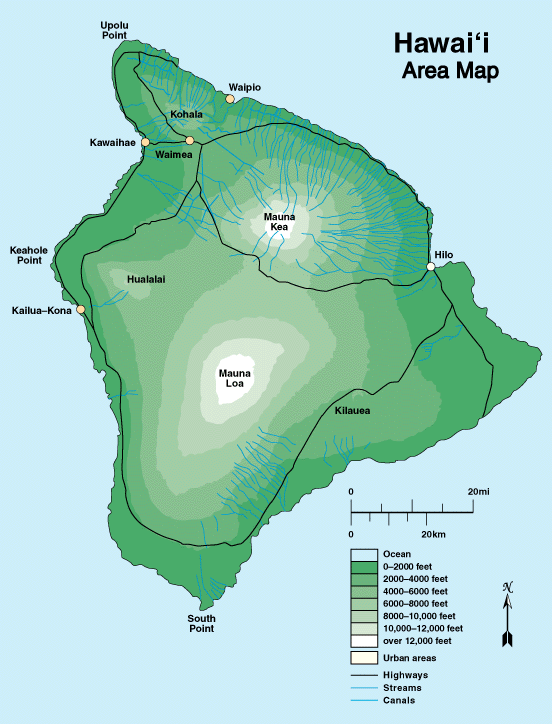
Island of Hawai'i

Island of Hawai'i
A. Demography
Population size: 120,317
Population density (no./sq. km): 11.5
Population growth (1980-1990): +31%
Percent urban population: 8%
B. Geography
Island area (sq. km): 10,433
Shoreline length (km): 428
C. Coral reefs
Estimated percent reef: 50%
Reef area (sq. km): 252
Reef types: fringing, non-structured communities
Protected areas:
Marine life conservation districts: Kealakekua Bay, Lapkahi State Historic Park, Old Kona Airport, Wailea Bay
Fisheries management areas: Hilo Bay, Puako Bay & Reef, Kailua Bay
Total area (ha): 288
Percent of protected reef area: 1.1%
Information sources:
Further reading:
Clark, J. R. K. 1985. Beaches of the Big Island. Univ. of Hawaii Press. 169 pp.
Click here for more information about Marine Life Conservations Districts
Clark, J. R. K. 1985. Beaches of the Big Island. Univ. of Hawaii Press. 169 pp.
Click here for more information about Marine Life Conservations Districts
Keywords:
Advance Scuba training, Adventure Sports, airlines, Basic Open Water, Digital Underwater Photography, discount travel, Divemaster scuba, Enriched Air, Extreme Scuba and Jason Kilgore, family travel, family vacations, Hawaii reef divers, Hawaii Scuba Diving, Hawaiian Islands, Hawaiian Islands sight seeing, hotels, Jason Kilgore, Kona, Maui, scuba certification, other specialty certifications, NAUI, NOAA, scuba diving, scuba rental gear, sharks, SSI, TDI/SDI, Underwater Instructors, vacation, Scuba and Jason Kilgore, Naui and Jason Kilgore, How to scuba dive, skin diving, snorkel, mask, fins, Reef Relief, coral reef, reef fish, maui divers, dive shops, scuba dive shops, cave diving, ice diving, wreck diving
Monday, December 17, 2007
Hawaiian Coast
The Hawaiian Coast features many diverse dive environments including lava tubes, caves, and arches. It is often worthwhile to go into caverns and lava tubes to see if there are any interesting critters hiding there. We can find sleeping sharks, nudibranchs, and other noctural animals there.
Come join us for a wonderful experience.
At Hawaii Reef Divers, the crew takes all the work out of diving. We set up your gear while you are checking in on the dock. When it's time to dive we make entering the water extremely simple and safe. A crewmember will carry your gear to the stern while you wait, seated, on one of two metal benches. All that's left is for you to strap on your tank and stride into the clear, calm waters. After your first dive enjoy fresh island fruit and a cool drink while the crew switches your gear over to a fresh tank. After your second dive your gear is rinsed for you as we motor back to the harbor. Our dives are guided by knowledgeable instructors who brief you on what to expect to see before you enter the water. Encounters with dolphin, turtles, and manta rays are common in the placid Hawaiian waters and other visitors make special appearances to assure that every dive can turn into something extraordinary and interesting to say.
Come join us for a wonderful experience.
At Hawaii Reef Divers, the crew takes all the work out of diving. We set up your gear while you are checking in on the dock. When it's time to dive we make entering the water extremely simple and safe. A crewmember will carry your gear to the stern while you wait, seated, on one of two metal benches. All that's left is for you to strap on your tank and stride into the clear, calm waters. After your first dive enjoy fresh island fruit and a cool drink while the crew switches your gear over to a fresh tank. After your second dive your gear is rinsed for you as we motor back to the harbor. Our dives are guided by knowledgeable instructors who brief you on what to expect to see before you enter the water. Encounters with dolphin, turtles, and manta rays are common in the placid Hawaiian waters and other visitors make special appearances to assure that every dive can turn into something extraordinary and interesting to say.
Subscribe to:
Posts (Atom)